
The Musical Alphabet
Welcome to Learn Music Theory, where we make music make sense one step at a time! This lesson accompanies Episode 2.
The Grand Staff: Your Musical Canvas
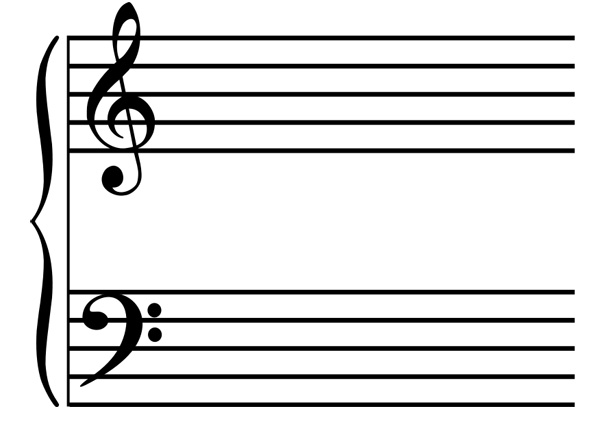
Before we name the notes, we need to know where they live. That place is the Grand Staff.
Think of it as the canvas we use to write music. It’s essentially two sets of lines stacked on top of each other—one for higher sounds and one for lower sounds.
The Seven Magic Letters
The musical alphabet is the core vocabulary of music. It's wonderfully simple—just seven letters.
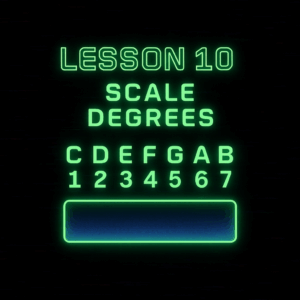
The loop can start on any letter. On piano, we often begin the same cycle from C, which gives C D E F G A B.
Yep. Just seven. There is no H, I, or Z. When you get to G, the pattern simply starts over again at A.
Why We Name Notes
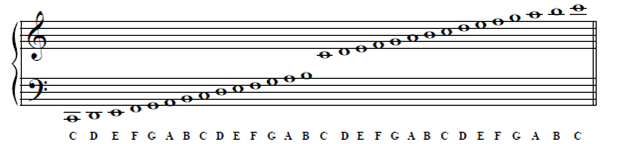
Giving letter names to sounds gives them a specific position in the language of music. Each line or space on the staff holds a pitch, and that pitch gets a name.
What is Pitch?
Pitch just means how high or low a sound is. It's determined by how fast something vibrates.
Slower vibrations = Lower pitch
So when we assign a letter, we're identifying its specific highness or lowness.
Why It Matters
Naming notes helps us understand the key, identify sounds, and see how they fit into a larger musical idea.
From Staff to Keys
Connecting theory to a physical instrument is where the magic happens. On a piano, each key has a note identity. For now, focus on the white keys mapping directly to letter names.
The letters map out onto the white keys in a repeating pattern.
The Keyboard Party
Imagine the piano as a giant keyboard party where every letter is throwing down its own unique sound!
After you play that B, the whole pattern repeats. Moving up for higher pitches, or down for lower ones.
Quick Review
- Grand Staff: The canvas where notes live.
- Musical Alphabet: A, B, C, D, E, F, G (just 7 letters).
- Pitch: How high or low a sound is (determined by vibration).
- Note Names: Like naming ingredients before cooking.
- Piano Layout: A repeating pattern of the 7 letters.
Your Musical Adventure Begins!
Congratulations! You've taken the first step into music theory. We've decoded the Grand Staff (the canvas) and the Seven Magic Letters (the notes).
If these letters are the who, in the next episode, we'll dive deeper on the how and learn how their superpowers work.
📜 Optional Side Quest Board
Brave enough for a challenge? The Grand Staff has a secret code hidden in its lines and spaces.
Learn the "FACE" and "EGBDF" shortcuts to read any note instantly.
 Spotify
 Anchor
 Amazon Music
 Apple Podcasts
 Google Podcasts
 iHeartRadio