
Audio
Whole Tones
The Big Step. Understanding the Whole Tone interval (2 Semitones) enables you to build Major Scales.
What is a Whole Tone?
You've mastered Semitones (the smallest step). Now, let's take a bigger step.
1 Whole Tone = 2 Semitones (2 Half Steps).
It simply means moving two steps away from your starting note, usually skipping one key in between.
Example 1: The White Key Jump
Let's look at moving from C to D.
Notice we skip the Black Key (C#). That's the "gap" that makes it a Whole Tone.
Example 2: G to A
Another classic white-to-white whole tone.
Example 3: The Tricky One
Moving from B to C#. This looks different because there is no black key between B and C.
Total: 2 Semitones = 1 Whole Tone.
Whole tones work in both directions: move two semitones to the right (up) or two semitones to the left (down), and the distance is still a whole tone.
Why It Matters: The Major Scale
Whole Tones are the bricks used to build the Major Scale.
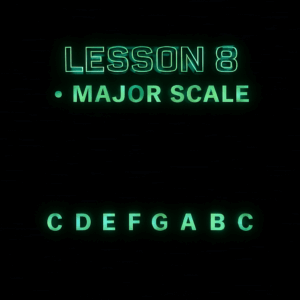
Unmute to hear the happy, stable sound of C Major.
📜 Optional Side Quest Board
You've learned the interval. Now master the "Gap" and the "Hunt".
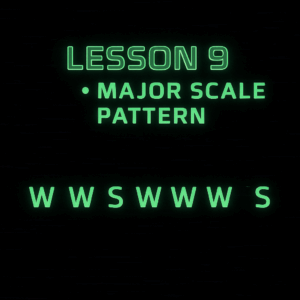
Discover the Blueprint (W-W-S...) that builds every Major Scale.
⚔️ ANALYZE DNA
Mini Games
SYLBiT: Tone Walker
Training Manual
• Walk UP (+2): Locate the key precisely ONE WHOLE TONE HIGHER (2 Semitones) than the grey key.
• Walk DOWN (-2): Locate the key precisely ONE WHOLE TONE LOWER (2 Semitones) than the grey key.
• Tip: A Whole Tone always skips one key (black or white) in between!
SECTOR RANKINGS
| RANK | OPERATOR | SCORE |
 Spotify
 Anchor
 Amazon Music
 Apple Podcasts
 Google Podcasts
 iHeartRadio